Thinking about a cabin near the Potomac and the ridgelines of Great Cacapon, but not sure which style fits you best? You are not alone. The right design can shape everything from your view and comfort to your maintenance and budget. In this guide, you will learn the most popular cabin styles in 25422, how they fit local terrain and weather, and what to inspect before you buy. Let’s dive in.
Why cabin style matters in 25422
Great Cacapon sits in the Appalachian foothills of Morgan County with sloped, wooded lots, river valleys, and four distinct seasons. That means your roof pitch, decks, insulation, and driveway access matter as much as your view.
Most second‑home buyers here want a mix of privacy, easy access to outdoor recreation, and reasonable upkeep. Many properties rely on private wells and septic systems, so due diligence on utilities is essential. A smart style choice helps you enjoy weekends without constant projects.
A‑frame cabins
What defines an A‑frame
A‑frames feature a steep triangular roofline and a compact footprint. Interiors often have a vaulted main room, a loft for sleeping, and a wall of windows aimed at the view. The steep roof sheds snow efficiently in winter.
Why buyers choose A‑frames
You get a dramatic mountain feel with a small footprint that sits well on sloped, view‑oriented lots. The open great room and lofted spaces feel cozy for short stays and weekend getaways.
Maintenance and trade‑offs
Large window walls need good sealing and summer shading to manage heat and glare. Lofts are charming but offer limited privacy and can be harder to heat or cool evenly. The steep roof helps with snow but can make roof access and repairs more complex. Insulation where the roof meets the sidewalls is critical to keep energy costs in check.
Best lot matches
- Sloped lots with a defined view corridor.
- Compact building sites where a small footprint makes sense.
- Owners who prefer a simple plan for short stays rather than full‑time living.
Log cabins
What defines a log cabin
Log cabins use stacked logs or log siding for a classic, rustic look. Expect thick‑wall character, deep window wells, exposed timber, and often a stone fireplace or chimney. Interiors may be open plan or more traditional with defined rooms.
Why buyers choose log cabins
You get the iconic cabin aesthetic that fits the wooded Appalachian setting. Properly built and maintained log homes can be very durable and hold their character for decades.
Maintenance and trade‑offs
Plan for periodic exterior care. Staining or sealing and chinking checks are recurring tasks that vary by product and exposure. Monitoring for moisture and insects is important, especially around log ends and shaded walls. Some older or unconventional builds may require specialized insurers. Energy performance depends on the construction method and sealing, but modern systems can deliver comfortable year‑round use.
Best lot matches
- Wooded parcels where the cabin blends into mature forest.
- Buyers who enjoy hands‑on upkeep and the warm feel of natural materials.
- Properties with good roof overhangs and drainage to protect lower log courses.
Chalet cabins
What defines a chalet
Chalets are multi‑level homes with broad roofs, wide balconies, and generous eaves. Large upper windows and wraparound decks focus on outdoor living. Many chalets are built into slopes with walkout lower levels.
Why buyers choose chalets
You can maximize views and outdoor time with multiple decks and balconies. The layout works well for hosting, with sleeping areas on separate levels for privacy.
Maintenance and trade‑offs
Decks, railings, and structural connections need regular inspection and treatment, especially in our four‑season climate. Eaves help protect walls but add gutter and flashing maintenance. Complex rooflines and multiple stories can raise repair costs compared with simpler designs.
Best lot matches
- Ridge or river‑view sites where decks and balconies shine.
- Sloped properties that benefit from a walkout lower level.
- Buyers who love entertaining and spending time outdoors.
Rustic contemporary cabins
What defines rustic contemporary
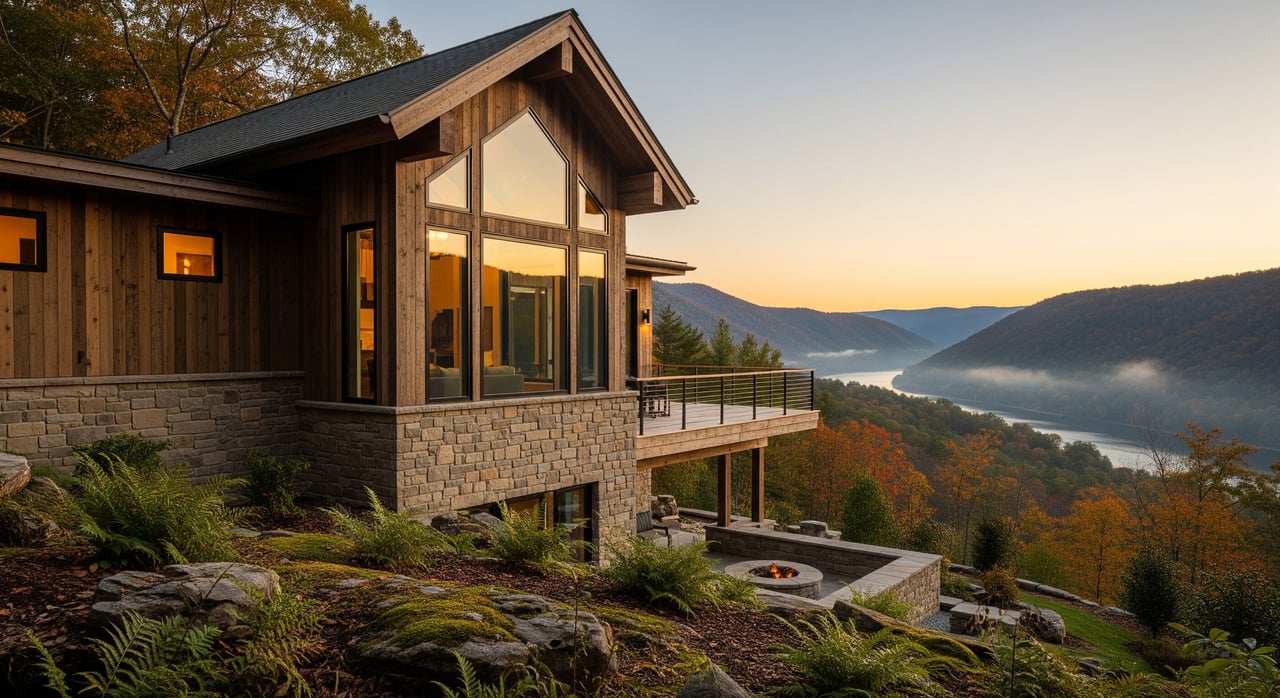
This style blends wood and stone with clean lines, large glass, and modern systems. Think open floor plans, updated kitchens and baths, efficient windows, and mini‑split heat pumps.
Why buyers choose rustic contemporary
You get cabin character with modern comfort and lower exterior upkeep. It is also easier to integrate energy upgrades and alternative systems in this style.
Maintenance and trade‑offs
Less exposed wood can reduce staining cycles, but custom finishes may be more expensive to repair. Large glass panels need high‑performance glazing to keep heating and cooling balanced. In rural settings, confirm that mechanical systems pair well with available electric service and consider a backup power option.
Best lot matches
- Year‑round homes or frequent‑use retreats where comfort is a priority.
- Sites that benefit from broad windows for light and views.
- Owners who prefer lower routine maintenance and upgraded systems.
Local factors to consider
Terrain and access
Many driveways are steep, narrow, or unpaved. Confirm who maintains the road and how snow removal works. Make sure emergency vehicles can access the property and that grades are manageable in winter.
Water and wastewater
Most remote cabins use private wells and septic systems. Request well yield and water quality tests, including coliform, nitrates, pH, and iron. Confirm septic permits, system type, age, and maintenance records. Ask for pump records and the most recent inspections.
Power, heat, and internet
Rural electric service and propane are common, while natural gas is less common. Heating can include woodstoves, propane furnaces, and efficient heat pumps. Cellular and internet options vary by location, so verify coverage if you plan to work remotely.
Flood and wildfire
If a property is near the Potomac River or in bottomlands, check FEMA flood maps and discuss elevation and insurance needs. On forested lots, plan for basic wildfire mitigation like pruning, defensible space, and non‑combustible zones near structures.
Permits and associations
Verify county permits for additions or major renovations. Some cabins sit within small associations that have rules about use and exterior changes. Review covenants and confirm that existing structures meet local requirements.
Quick style matching: what fits your life
- Weekend escape, minimal fuss: A‑frame or rustic contemporary.
- Full‑time or frequent use with modern comfort: Rustic contemporary or a well‑insulated log home.
- Entertaining and multi‑level living: Chalet.
- Deep rustic character and authenticity: Log cabin.
Ask yourself how often you will visit, who will use the space, and how much time you want to spend on upkeep. The right match keeps your focus on the river, trails, and time with guests rather than constant chores.
Inspection checklist for 25422 cabins
Use this list to prepare for showings and offers:
- Recent well water test results and pump service history.
- Septic permit, system type, age, capacity, and maintenance records.
- Roof age, recent roof inspections, and flashing or gutter notes.
- Deck and balcony inspection, including ledger attachments and railings.
- Fireplace and chimney sweep or inspection report, especially if wood heat is primary.
- Log homes: chinking, staining, insect, and rot checks by a qualified inspector.
- Records for HVAC, heat pumps, generators, and any solar or alternative systems.
- FEMA flood status and expected insurance requirements if near waterways.
- Proof of permitted work for additions and major renovations.
- Survey or boundary confirmation, plus easements and driveway access details.
Care and upkeep timelines
Plan for annual exterior checks after winter and heavy storms. Expect moderate tasks like staining, deck treatment, or chinking every few years depending on exposure and product. Major renewals such as roof replacement or septic system work follow longer timelines that depend on materials and service history.
Ready to explore cabins in Great Cacapon?
Whether you are eyeing an A‑frame above the river or a chalet with sunset decks, a local guide can help you balance views, access, utilities, and upkeep. Our team understands Morgan County terrain, seasonal conditions, and what to verify for wells, septic systems, and rural roads. If you want a second home that fits your lifestyle and budget, we are here to help you find it.
Reach out to the local team at Kesecker Realty, Inc. to start your search with neighborhood‑level insight and a clear plan.
FAQs
Which cabin style suits weekend use in Great Cacapon?
- A‑frames and rustic contemporary cabins typically offer the best mix of compact layouts, dramatic views, and lower routine upkeep for short stays.
What maintenance should I expect with a log cabin?
- Plan for periodic staining or sealing, chinking checks, and regular monitoring for moisture and insects, plus routine chimney maintenance if you use a woodstove.
How do I check flood risk near the Potomac in 25422?
- Ask your agent to review FEMA flood maps, confirm base flood elevation, and obtain an insurance estimate if any part of the property lies in a mapped flood zone.
Is winter access a concern on steep mountain roads?
- It can be; verify who handles road and driveway maintenance, snow removal practices, and whether the grade allows safe access for emergency vehicles in winter.
What utilities are typical for remote cabins in Morgan County?
- Many cabins use private wells and septic systems, rural electric service or propane, and a mix of woodstoves, propane heat, or heat pumps, with variable cellular and internet coverage.