Selling acreage near Paw Paw is not the same as selling a house in town. Buyers usually have bigger questions right away: Where are the true boundaries, how does access work, can the land support a home, and what paperwork is available? If you want a smoother sale in ZIP code 25434, preparing those answers before you list can help your property stand out and reduce uncertainty. Let’s dive in.
Start With Boundaries and Ownership
When you sell land, buyers want to know exactly what they are considering. In West Virginia, the WV Property Viewer makes it clear that assessor tax maps are for property tax assessment only and do not establish legal boundaries. It also notes that deeded acreage is the authoritative acreage record, while calculated acreage is only an estimate.
That means your first step should be gathering the documents that explain what you own. Your deed, any recorded survey, and any paperwork that clarifies acreage can help answer questions early. If your parcel has been in the family for years, it is also smart to review the ownership chain and any estate-related documents recorded with the Hampshire County Clerk.
If the tax map appears inconsistent with your deed or your understanding of the property, the WV Property Viewer advises owners to contact the county assessor and notes that a deed or survey is helpful when resolving discrepancies. For many sellers, this is where preparation starts to pay off. Clear records can make buyers more comfortable and reduce the chances of confusion later.
Why a Survey Can Help
A survey is not always required to sell acreage, but it can be very useful if property lines, deeded acreage, or access are unclear. Since tax maps do not control legal boundaries, a recent survey can give buyers a more reliable picture of the tract.
This is especially helpful for irregular parcels, legacy-family land, or properties where visible lines on the ground do not match what buyers expect. If you already have a recorded survey, keep it ready to share. If you do not, consider whether getting one now could make your listing easier to market.
Clarify Access Before Listing
Rural buyers nearly always ask how they get to the property and whether access is legally and physically straightforward. If your acreage takes access from a state highway, the West Virginia Division of Highways requires a driveway or encroachment permit before construction. The same rules say that changes to a driveway or to the use of the property served by the driveway require a new permit.
Even if you are not planning improvements yourself, permit status can still matter to a buyer thinking ahead. If you have documents related to the entrance, road maintenance, or easements, organize them before the property goes live. A simple, documented access story is easier to market than a vague one.
For acreage that may be subdivided, Hampshire County planning materials add more context. The county subdivision ordinance says roads should be usable year-round by school buses, fire trucks, service trucks, and passenger cars, and lots served by wells or septic should show the well, septic tank, and building locations on the plat. You can review county planning resources through the Hampshire County planning portal.
Make the Entrance Easy to See
Good preparation is not just about paperwork. It is also about helping buyers understand the property when they arrive.
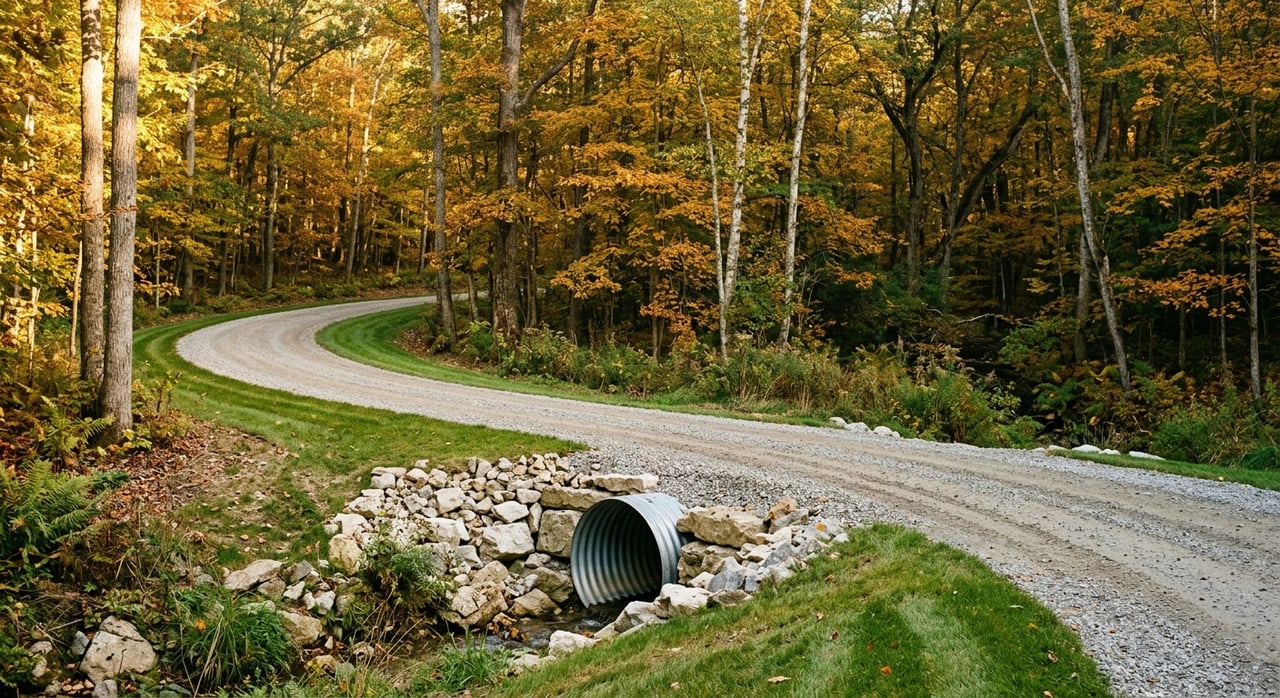
If your entrance is overgrown or hard to spot from the road, clean it up before photos and showings. Mowing or clearing the entry, marking the drive, and opening a path to likely build sites can make a big difference. For rural land, first impressions often start at the gate.
Answer Buildability Questions Early
Many acreage buyers in the Paw Paw area are not just looking for open land. They are also trying to understand whether the property may work for a cabin, second home, or future primary residence. That is why septic, well, soil, and floodplain details often shape how quickly a buyer moves forward.
The Hampshire County Health Department says a septic permit must be obtained before any building permits are issued. It also states that wells require permits, and homeowners can request water sampling. If you have older septic or well records, gathering them now can make your property easier to evaluate.
West Virginia law also explains that site approval for a sewage system includes a six-foot hole and a percolation test, along with reserve area requirements for approved systems. You can review those details in the state code on sewage system site approval. For buyers, a parcel with completed soil or perc information is often easier to assess than one with no documentation at all.
Soil Information Matters
Not every land buyer will understand soil conditions on sight. That is why even basic documentation can be helpful.
WVU Extension advises buyers to inspect soil and site factors, review soil maps, ask nearby residents about site conditions, and seek help from NRCS or Extension before making a final decision. USDA NRCS also identifies the Web Soil Survey as the official online source for soil data. If you have soil notes, prior testing, or a clear record of past evaluations, keep those materials ready.
Check Floodplain Status
Floodplain questions can affect a buyer’s comfort level and future planning. FEMA’s Flood Map Service Center is the official public source for flood hazard information and allows searches by address or coordinates.
Hampshire County planning materials also note that property in the 100-year floodplain, or close enough to create uncertainty, may need a plat and a flood elevation certificate as part of the building-permit process. If your acreage includes creek frontage, low ground, or areas near mapped flood zones, it is wise to check this before marketing and share what you find.
Prepare for Recreational Buyers
Paw Paw has a strong outdoor and second-home appeal, and that can be part of your property’s story when it is presented accurately. The National Park Service describes the Paw Paw Tunnel as one of the C&O Canal’s most significant engineering features, with access to the two-mile Tunnel Hill Trail. The C&O Canal Trust also highlights Paw Paw’s setting near the Potomac River bends and the connection to the tunnel and towpath.
For buyers looking at recreational land, weekend use, or a future cabin site, proximity to outdoor destinations can matter. What helps most, though, is showing how your land functions. Clear trails, visible clearings, and photos of usable ground can help buyers picture the property more confidently.
Nationally, the National Association of Realtors reported that land sales generally close within 60 days, and that 25% close in less than 30 days. That is a good reminder to prepare your documents, photos, and property details before listing rather than after buyer questions start coming in.
Document Internet and Utility Information
Second-home and rural buyers often ask about internet service early in the process. USDA says reliable high-speed internet is fundamental to rural prosperity, and the FCC broadband map can be used to check availability by address.
If your acreage has strong broadband availability or dependable cell service, document it clearly. If service is limited, it is better to be upfront. Honest details help buyers decide whether the land matches their plans and can prevent avoidable surprises.
In the same way, any information you have about public water, sewer availability, or private utility considerations can be valuable. Hampshire County planning materials note that building-permit applications should include a site plan, septic permit for new homes and bedroom additions, well permit for new homes, or a letter of availability if the property will use public water or sewer.
Simple Steps That Improve Marketability
You do not need to over-improve raw land to prepare it for sale. In most cases, the goal is to make due diligence easier and show the property honestly.
A few practical steps can go a long way:
- Gather your deed, survey, and any ownership records
- Organize access, easement, and road-related documents
- Locate septic, well, perc, or soil paperwork
- Check flood-zone status and save supporting information
- Clear the entrance and any obvious trails or viewing areas
- Remove trash, debris, or items that distract from the land
- Flag corners or key points if you can do so accurately
- Take photos that show access, terrain, views, and usable areas
When buyers can quickly understand boundaries, access, and buildability, your acreage becomes easier to evaluate. That often leads to stronger interest and fewer delays.
Work With a Local Strategy
Selling acreage in Paw Paw calls for more than putting a sign at the road. Rural land buyers tend to ask detailed questions, and they often compare multiple properties based on documentation, access, and future use potential.
That is why preparation matters so much. When you can present a clear title story, a straightforward access story, and organized property information, you give buyers more confidence to move forward.
If you are thinking about selling acreage in 25434, working with a brokerage that understands rural land, second-home demand, and local market presentation can make the process much smoother. To talk through your property and next steps, connect with Kesecker Realty, Inc..
FAQs
Does a Hampshire County tax map prove acreage boundaries?
- No. The WV Property Viewer states that tax maps are for assessment only and do not establish legal boundaries, while deeded acreage is the authoritative record.
Do you need a survey to sell acreage in Paw Paw?
- Not always, but a survey can help reduce buyer hesitation when deeded acreage, visible lines, or access are unclear.
Do you need septic approval before selling land in Hampshire County?
- No, not to transfer ownership, but the Hampshire County Health Department says septic permits are required before building permits are issued, so documentation can help if you want to market the land for future building.
What should you verify if acreage uses a state-road entrance?
- You should review driveway or encroachment permit status because the West Virginia Division of Highways requires permits for state-highway access and for certain changes in driveway use.
What documents help most when selling Paw Paw acreage?
- The most helpful items are usually your deed, any survey, access or easement records, septic and well paperwork, flood-zone information, and clear photos that show entrances, trails, and usable ground.