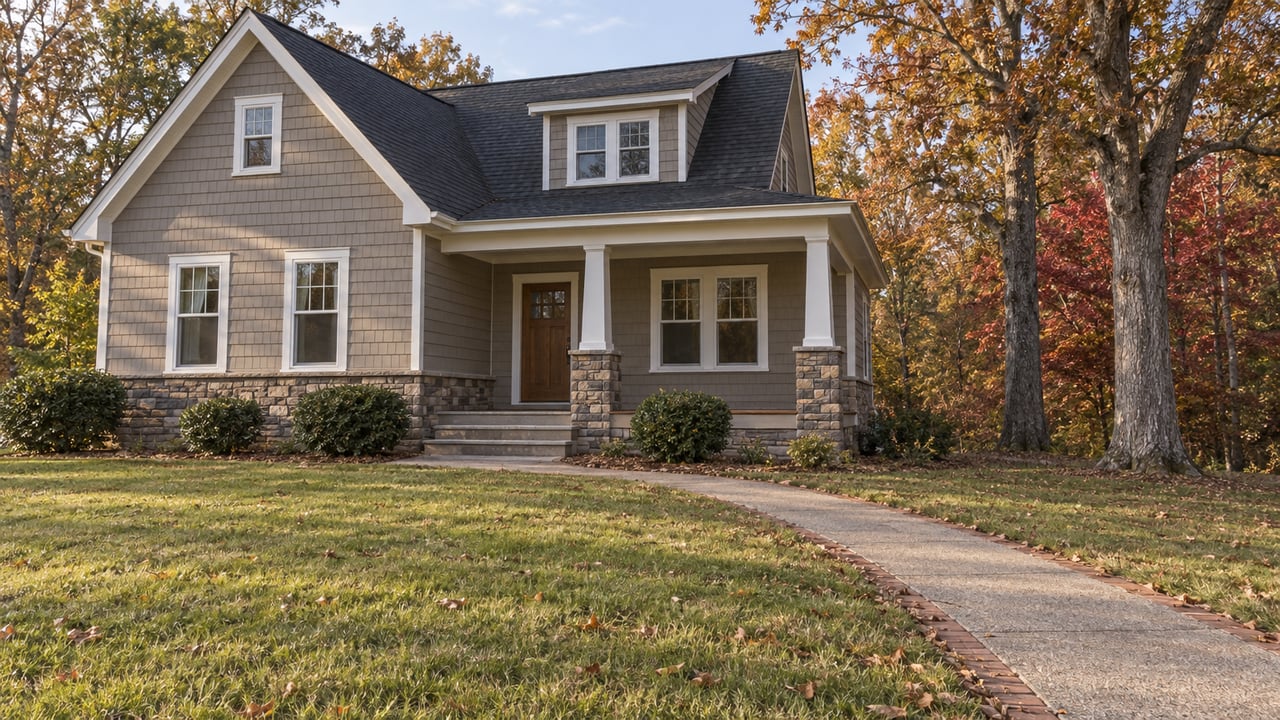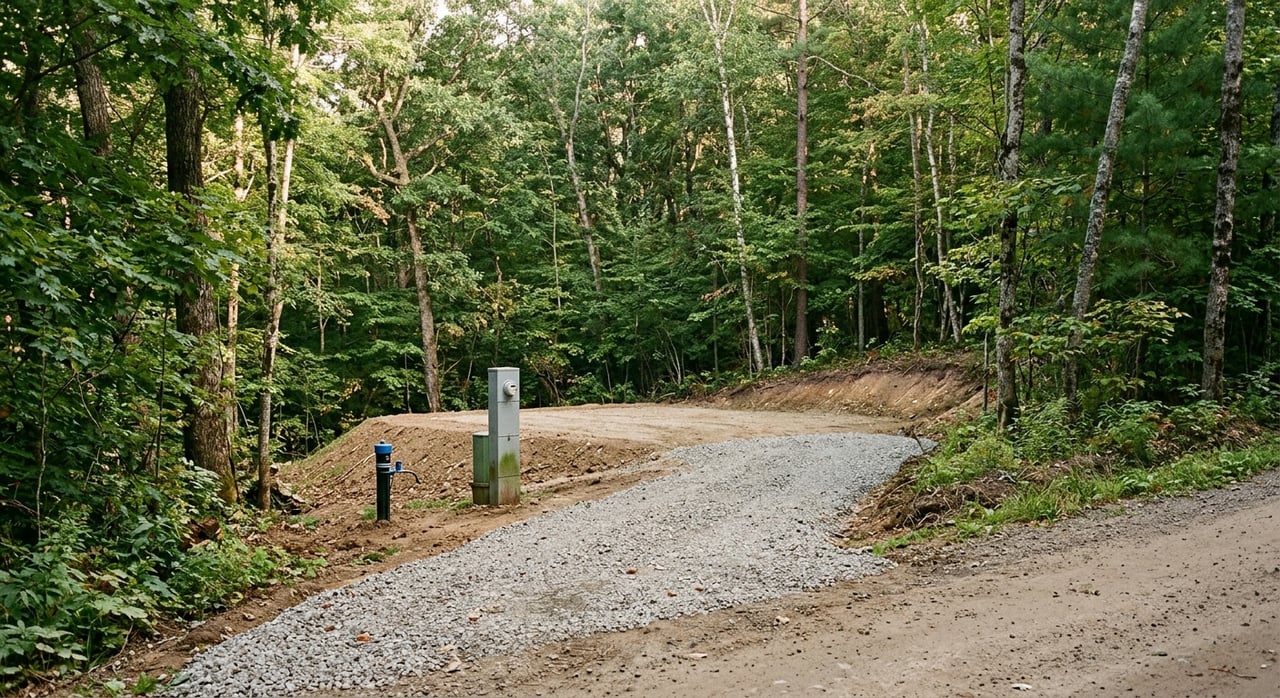
Dreaming about a cabin in Great Cacapon is the fun part. Making sure the land can actually support that cabin is the part that protects your budget, timeline, and peace of mind. If you are thinking about buying land in 25422, this guide will help you focus on the details that matter most before you commit. Let’s dive in.
Start With Buildability
When you buy land for a cabin in Great Cacapon, the first question is not how pretty the view is. The first question is whether the parcel is realistically buildable under local rules and site conditions. In Morgan County, that means treating land as a build-feasibility decision first and a lifestyle decision second.
Morgan County’s Planning Commission says an Improvement Location Permit file may require approved septic and well permits, approved highway entrance permits, a site sketch, and project plans. That gives you a clear signal right away. A parcel that looks simple on a listing sheet can become much more complex once permits and site requirements come into play.
If the property is inside the Town of Bath or the Town of Paw Paw, town permitting rules apply instead of the county process. That is why you should confirm early which set of rules governs the parcel. Never assume the same process applies to every property in the area.
Check Lot Status and Restrictions
Before you picture a driveway, a porch, or a fire pit, make sure the parcel is a legal lot of record. That is one of the most important first questions to ask Morgan County Planning. If the parcel has a complicated split history or subdivision status, you may need additional review before moving forward.
Morgan County’s ordinance framework puts attention on subdivision, floodplain, addressing and mapping, and other special-purpose rules. In practical terms, this means there may not be one simple countywide zoning answer that tells you everything you need to know. You should verify use restrictions directly with planning staff rather than relying on assumptions.
It is also important to separate county oversight from private restrictions. Morgan County notes that it does not enforce subdivision covenants. That means deed restrictions and HOA rules, if any, need to be reviewed on their own because they can still affect how you use the property.
If a parcel is classified as a Class II Active Farm, that can also affect how some improvements are handled. Even if your goal is a cabin, agricultural classification may still matter during your review. It is one more reason to look closely at the parcel’s records before closing.
Access Can Make or Break a Deal
In Great Cacapon, access is often the issue that changes everything. A lot may have road frontage on paper but still present challenges when it comes to building a safe, approved entrance. That is especially true in rural areas with slopes, curves, and drainage concerns.
The West Virginia Division of Highways says new driveways onto state highways require an encroachment permit. These permits are meant to protect safety and traffic flow, and they must meet design standards for sight distance, drainage, and safe slopes. If the approach is from a county-district road, state code places that under the county road engineer’s direction.
This means you should confirm what kind of road serves the parcel. Ask whether the frontage is on a state road, a county road, or a private road. Each situation can affect both the approval path and the cost of making the land usable.
Morgan County GIS also handles new addresses and road-name approvals. That matters if your future cabin site is on a private road or a newly created road. Without proper addressing and approved access, the property may be harder to develop than it first appears.
Utilities Are a Parcel-by-Parcel Question
One of the biggest mistakes cabin buyers make is assuming utilities will be straightforward. In Great Cacapon, utility availability can vary a lot from one parcel to the next. Even nearby tracts may have very different well, septic, and service options.
Morgan County’s permit checklist includes hookup letters from Warm Springs Public Service District or Berkeley Springs Water Works where applicable. Still, many rural parcels need to be evaluated individually for well and septic feasibility. You should not treat nearby service as proof that your lot will work the same way.
West Virginia requires a permit from the local health department before drilling, modifying, or abandoning a well. The well must also be drilled by a licensed well driller. On-site wastewater systems are also permitted and inspected through the local health department.
A major point for cabin buyers is lot size. West Virginia’s on-site sewage program says alternative systems for new construction are only considered if the lot is two acres or larger. If you are looking at a smaller parcel, that one rule could shape whether the property is practical for your plans.
Morgan County’s rural-water report includes a Great Cacapon region study and references the Cacapon Mountain Aquifer. That is a reminder that water sourcing is local and site-specific. In this market, broad assumptions are not enough.
Topography Matters More Than Acreage
A five-acre parcel does not always offer five usable acres. In Great Cacapon and the surrounding parts of Morgan County, slope, drainage, soils, and layout can reduce the buildable area more than buyers expect. A beautiful wooded tract may still have limited space for a cabin, septic field, driveway, and drainage pattern that all work together.
Morgan County’s comprehensive plan tracks topography, slope, geology, soils, hydrology, floodplains, and watersheds. WVDOH driveway guidance also warns against sharp curves, steep grades, and drainage conflicts. Together, those factors can affect where you build, how you access the home site, and what it may cost to improve the land.
This is why acreage alone is not a reliable shortcut when comparing lots. A smaller parcel with a workable building envelope may be more practical than a larger parcel with difficult terrain. When you walk land, think in terms of usable space, not just total size.
Public listing samples show that Great Cacapon land can range from smaller recreational tracts around 4.86 to 9.46 acres to much larger parcels such as 34.16 or 389.2 acres. That listing sample is not a formal market statistic, but it does show the wide range of parcel sizes you may encounter. Your review process should stay just as careful on a small lot as on a large one.
Screen Floodplain Early
Floodplain review should happen before you make a firm offer. In Morgan County, the floodplain ordinance applies in the unincorporated county and requires an improvement-location permit before development or new construction. If land is partly or fully in a floodplain, a site plan with elevation data is required.
That does not automatically mean a parcel is unusable. It does mean the path forward may involve added review, design constraints, or costs. The earlier you identify that issue, the better you can decide whether the property still fits your goals.
FEMA’s Flood Map Service Center is the official place to review flood-hazard maps. It is smart to pair that map review with a direct conversation with Morgan County Planning so you understand how the rules apply to the specific parcel you are considering.
The Best First Calls to Make
If you want to save time and avoid surprises, start with the local offices that deal with land-use questions every day. For Great Cacapon cabin land, the two most useful first calls are usually Morgan County Planning Commission and the Berkeley-Morgan Health Department. These conversations can quickly reveal whether a parcel deserves a closer look.
Ask Morgan County Planning:
- Is this parcel a legal lot of record?
- Is subdivision or exemption review needed?
- Do floodplain rules apply here?
- Is the parcel governed by county rules or by Bath or Paw Paw rules?
Ask the Berkeley-Morgan Health Department:
- Is there an approved septic location?
- Would the site need an alternative system?
- Does the lot size support that system?
- Is a well permit already in hand?
- Is water-quality testing recommended before closing?
Ask about road access and title matters:
- Is the frontage on a state road, county road, or private road?
- Is a driveway permit or approach approval required?
- Are there easements affecting access or utility placement?
- Are there private-road rights, deed restrictions, or subdivision covenants to review?
A Smart Cabin-Land Buying Approach
The best land buyers in Great Cacapon slow down before they speed up. They confirm legal status, access, septic potential, water options, topography, and floodplain issues before they get emotionally attached to the property. That approach can help you avoid buying land that is scenic but hard to use.
A local real estate team can help you ask better questions, spot red flags, and connect the dots between listing details and real-world feasibility. That matters even more with rural acreage and cabin land, where each parcel has its own story. If you want practical, local guidance as you sort through Great Cacapon land options, contact Kesecker Realty, Inc. today.
FAQs
What should you check first when buying land for a cabin in Great Cacapon?
- Start by confirming whether the parcel is buildable, including lot status, septic and well feasibility, access, floodplain issues, and which local permitting rules apply.
Does Morgan County have one zoning map that answers every land-use question?
- No. Morgan County’s ordinance framework includes subdivision, floodplain, addressing, mapping, and other special-purpose rules, so buyers should verify restrictions directly with planning staff.
Do you need a permit for a driveway on Great Cacapon land?
- If the new driveway connects to a state highway, WVDOH says an encroachment permit is required, and access design must meet safety, drainage, and slope standards.
Can a small lot in Great Cacapon support an alternative septic system?
- West Virginia’s on-site sewage program says alternative systems for new construction are only considered if the lot is two acres or larger.
Why does topography matter when buying cabin land in Morgan County?
- Slope, soils, drainage, and driveway layout can reduce the usable building area, so a parcel’s acreage may overstate how much of the land is practical for a cabin site.
What offices should you contact before buying land in Great Cacapon?
- The most useful first calls are usually Morgan County Planning Commission for lot status and permitting questions, and the Berkeley-Morgan Health Department for septic and well questions.